

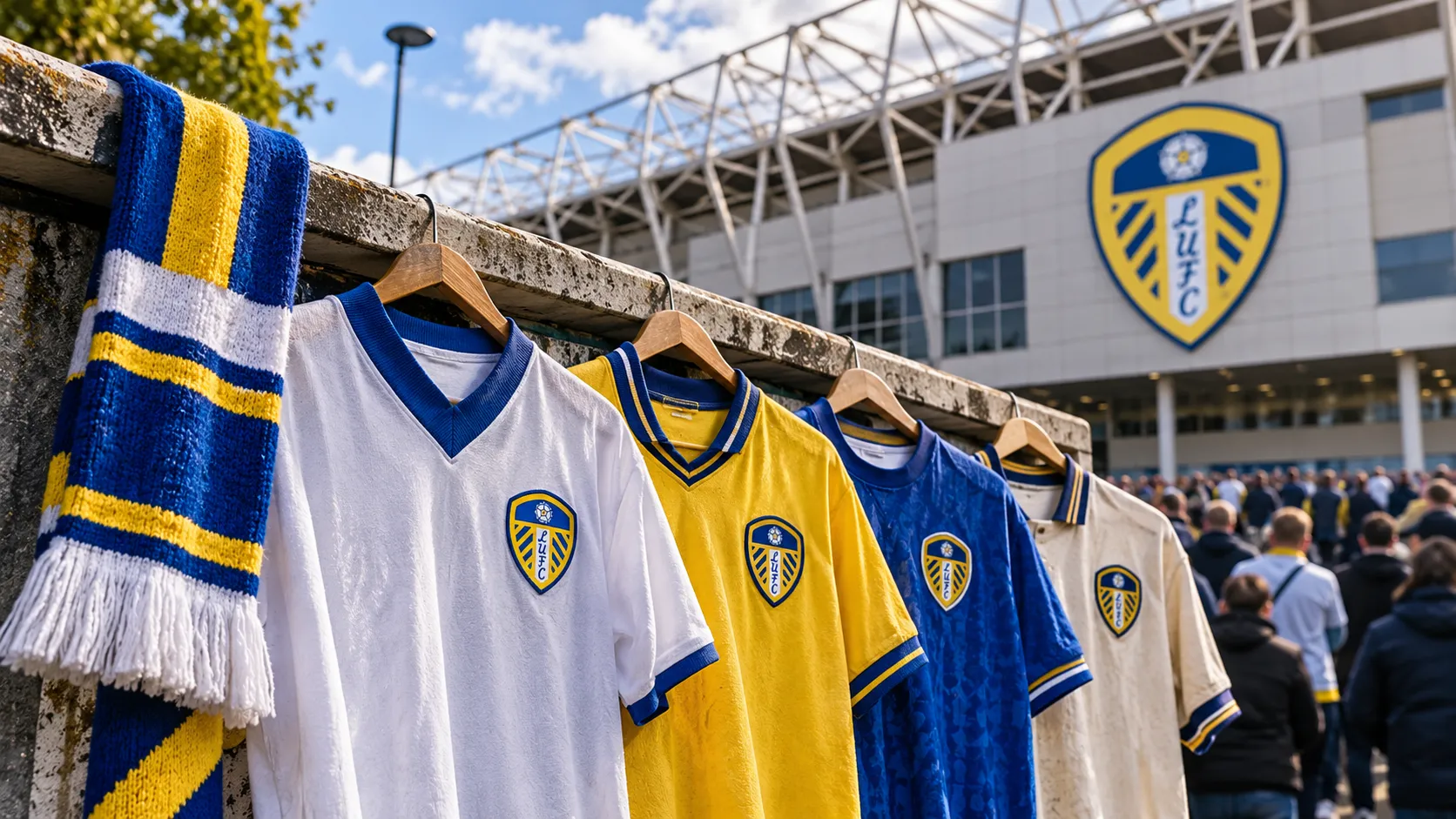
An Elland Road away day is one of the few remaining trips in English football that still feels like the eighties, in the good sense and occasionally in the other one. The ground is old, loud and unapologetic, and it has resisted most of the smoothing that has happened everywhere else.
It is also straightforward to do badly. The ground is not in the city centre, the away end is in a specific and slightly awkward corner, and the surrounding area empties fast after a match.
Getting there
Leeds has excellent rail connections and the ground does not. Elland Road sits around two miles south-west of the station, which is a walk of thirty to forty minutes or a short taxi, and there is a match-day bus service from the city centre that fills up early.
The walk is the best option if the weather allows, because it takes you through a part of the city that puts the ground in context and because the taxi queue after the final whistle is substantial. Going out by foot and back by taxi is the sensible combination.
Parking near the ground exists and is heavily restricted on match days. If you are driving, park towards the centre and travel in, rather than circling residential streets looking for a space that was taken three hours ago.
Where the away end is
The away allocation at Elland Road sits in a corner section, typically a few thousand depending on the fixture, and it is close enough to the home support on one side to make for a lively afternoon.
Sightlines are decent, which is not always true of corner sections in older grounds. The view is angled rather than central, and the rake is steep enough that you are not looking at the back of anyone’s head.
Facilities are what you would expect from a stand of that age functional, busy at half time, and not the reason you came. Arrive ten minutes before you think you need to and the queues are manageable.
What is the atmosphere actually like?
Loud, sustained and genuinely hostile in the way that has largely disappeared from newer stadiums. Leeds support is organised without being choreographed, which means the noise rises and falls with the match rather than running to a plan.
“Marching on Together” before kick-off is worth being in the ground for, and the away end is close enough to the Kop that the exchange of songs is a real exchange rather than two sets of people singing past each other.
It is not an intimidating day out in any practical sense. Policing and stewarding are heavy and competent, and the hostility is noise rather than threat. But it is a day where you will notice you are the away support, which is the point of going.
How much does the day cost?
Ticket prices for away league fixtures are capped across the division, which puts the match itself at a predictable figure regardless of where you are going. Everything else is variable.
Travel is the dominant cost from anywhere outside Yorkshire. Advance rail fares booked early are a fraction of walk-up prices, and the usual caution applies a fixture that might move for television makes an advance ticket a gamble.
Food and drink in Leeds is cheaper than in London and comparable to most northern cities. Budget for a round in town before the match, something to eat afterwards, and a taxi you had not planned, and you will be close.
The one avoidable expense is parking. Match-day restrictions around the ground mean the available spaces go early and the rest of the streets are permit-only, and the fines are issued briskly.
The club’s history, briefly
Leeds were champions in 1968-69 and 1973-74 under Don Revie, and again in 1991-92 under Howard Wilkinson which made them the last champions of the old First Division before the Premier League was created the following summer.
The Revie side is the one that defines the club’s identity, and it is also the reason the shirt looks the way it does. Revie changed the kit to all white in the early sixties explicitly to emulate Real Madrid, replacing the blue and gold the club had worn before.
What followed the nineties was a long decline, including a spell in the third tier, before promotion returned the club to the top flight in 2020. That arc two eras of genuine success separated by decades of difficulty is why the support is the way it is.
Leeds United retro shirts
The all-white kit reproduces beautifully, for the obvious reason that there is almost nothing to get wrong. leeds united retro shirts from the Revie period are among the cleanest designs in English football, and the markers that distinguish a good reproduction are the crest and the collar rather than any pattern.
The seventies shirts with the smiley badge have a following of their own and are the most distinctive thing the club has worn. The 1992 title shirt is the other obvious one, and it is a much busier design that divides opinion sharply.
If you want something less obvious, look at the away and third kits from the nineties. Leeds produced some genuinely strange change strips in that period, they were made in far smaller numbers, and they cost a fraction of the home shirts. Our full Leeds range guide covers the current options alongside the historic ones.
Is it a good first away day?
Yes, with one qualification. Elland Road offers the thing most people are actually looking for when they go to an away match noise, proximity, a ground with history and it does it without any of the difficulty of a genuinely awkward trip.
The qualification is that it is loud and close, and if you are taking someone who has only been to a modern stadium, say so beforehand. The away corner at a full Elland Road is not a gentle introduction, and some people love that immediately and some do not.
For a first trip with children, the midweek fixtures are easier than the weekend ones: smaller crowds, shorter queues, and a calmer walk back. The atmosphere is still there, just at a volume that does not require explaining afterwards.
Before and after the match
The area immediately around the ground has a handful of pubs and they are busy and mostly home support. Away fans are generally better served drinking in the city centre beforehand and travelling in together.
Afterwards, the ground empties towards the city and the roads are slow for an hour. If you have a train to catch, build in more time than the distance suggests, and if you have flexibility, stay for a drink in town rather than queuing.
Food near the ground is limited and the city centre is well supplied, which points to the same plan: eat and drink centrally, travel in, travel back, finish in town. Working out the ticket side first is covered in how away end allocations are decided.
Frequently asked questions
How do I get to Elland Road from Leeds station?
It is roughly two miles south-west a thirty to forty minute walk, a short taxi, or a match-day bus from the city centre that fills up early. Walking out and taxiing back works best.
Where do away fans sit at Elland Road?
In a corner section, with a few thousand places depending on the fixture. Sightlines are angled but good, and the rake is steep enough for a clear view.
Why do Leeds play in all white?
Don Revie changed the kit in the early sixties to emulate Real Madrid, replacing the blue and gold the club previously wore.
Which Leeds retro shirt should I buy?
The plain white Revie-era shirt for a clean classic, the seventies smiley-badge kit for something distinctive, or a nineties away shirt for value and rarity.