

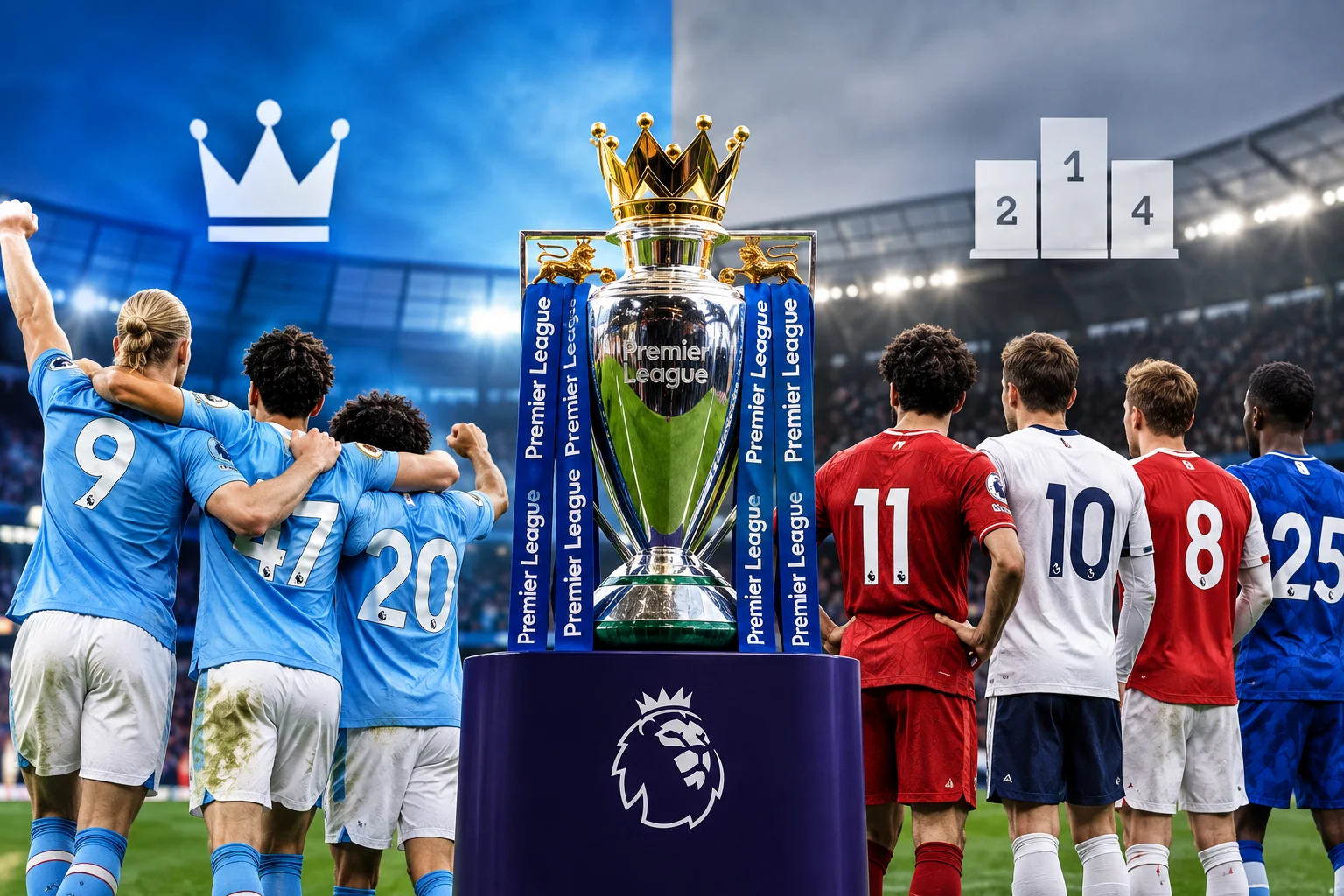
The difference between winning the Premier League and finishing second or third can look tiny from the outside. A handful of points over thirty-eight games. Often the second-placed side beat the champions in one or both of their meetings, played brilliant football for long spells, and had a case for being the better team on their best days.
Yet the same kind of team tends to win the title year after year, and the reasons are more consistent than the narrow margins suggest.
Is it about winning the big matches?
Less than people think, which surprises many supporters.
Matches between the top sides attract the attention, the build-up and the headlines, and it feels as though they must decide the title. But they are only a small number of the thirty-eight fixtures. Winning them helps, and losing them hurts, but a title rarely comes down to the head-to-head games alone.
What decides it far more often is what happens against everyone else. That is where the real gap between the champions and the chasing pack tends to open.
Why do the games you should win matter most?
Because the champions drop fewer points in them.
Every season contains a long run of matches against sides in the lower half of the table. The top four will win most of these. The champions win almost all of them, including the awkward ones: the cold away trips, the matches against well-organised defences, the games where they play poorly but still find a winning goal.
A top-four side might draw two or three of those matches that a champion would win. Across a season, those dropped points add up to exactly the kind of gap that separates first from second.
What makes a side able to win when it plays badly?
This is the quality that most defines champions.
Every team has off days, when the passing is slow and the chances do not come. Most sides draw or lose those matches. Title winners find a way through, often with a late goal, a set piece or a moment from an individual player. Over a season, the ability to turn bad performances into wins is worth more points than playing brilliantly in the matches that are going well anyway.
It usually comes down to having players who can decide a match on their own, a solid defence that keeps the side in games, and a mentality that expects to win even when things are going wrong.
How important is consistency across a season?
It is close to everything.
Title winners rarely have long bad runs. They might lose a match here and there, but they avoid the spells of three or four games without a win that can sink a challenge. Consistency over ten months is harder than brilliance over ten weeks, and it is the thing that separates a genuine champion from a side that has a fine spell.
Top-four sides often have periods where they look like champions, followed by periods where they fall away. The team that keeps its level through the difficult months usually finishes top.
Does squad depth play a part?
A large one, because consistency depends on it.
A team cannot stay consistent across a whole season if it loses quality every time injuries arrive. Champions tend to have squads deep enough that their level barely drops when key players are missing. Top-four sides often have a strong first eleven that struggles when it is disrupted, and that shows in the matches where they are forced to rotate.
How much does the manager matter?
Considerably, particularly over the long run of a season.
A manager who keeps players focused through the dull winter fixtures, handles pressure well in the run-in and manages the squad to avoid fatigue has a real effect on the points total. Title races often tighten in the final weeks, and the manager who keeps the side calm when a rival is closing tends to come out on top.
Experience of winning matters here too. Players and staff who have won titles before know how the final weeks feel and are less likely to be unsettled by them.
When is a title race actually decided?
Often earlier than it appears, even when the final table is close.
The points gathered in the first half of the season count exactly the same as those in the final weeks, but they tend to be forgotten. A side that drops points in autumn through poor form or injuries can spend the rest of the season chasing a gap it never quite closes. Many title races that look as though they were decided on the final day were really decided by a bad run months earlier.
The run-in matters too, of course. But the champions have usually built their lead, or at least stayed within reach, long before the final weeks arrive.
Does goal difference ever decide it?
Occasionally, and it is a reminder that every goal matters.
When two sides finish level on points in the Premier League, goal difference separates them. That is rare at the very top, but it has happened, and a title decided that way turns every goal scored and conceded across the season into part of the result. A heavy win in October or a late goal conceded in a comfortable match can end up mattering far more than anyone realised at the time.
Do title winners start the season strongly?
Often, though not always. A good start builds confidence and puts pressure on rivals, who then have to win their own matches knowing a slip will cost them ground. Champions who begin slowly can still recover, but it makes every later setback more damaging, because there is less margin to absorb it.
So what really separates them?
Not a single thing, but a pattern. Champions win the ordinary matches more reliably than anyone else. They find ways to win when they play badly. They stay consistent through the hard months. And they have the depth and the leadership to keep all of that going across a whole season.
The top-four sides often have just as much talent. What they lack is that relentless reliability in the matches that seem least important.
Squad depth sits underneath almost all of this, and our piece on how squad depth decides a Premier League season covers it in detail. Clubs structure their shirt ranges with similar care, and our comparison of Chelsea’s home, away and third kits shows how.
The sides that have managed it are remembered by their shirts as much as their points totals, which is part of why Arsenal retro shirts from the unbeaten season still sell as well as they do.
Frequently asked questions
How do teams win the Premier League?
Most often by dropping fewer points than their rivals against sides lower in the table, winning even when they play badly, and staying consistent across the whole season.
Do title winners always win the big matches?
No. Head-to-head matches between top sides are only a small share of the fixtures. Titles are usually decided by results against the rest of the league.
Why do some teams fade in title races?
Often because of injuries they cannot cover, a run of dropped points in matches they were expected to win, or pressure in the final weeks when a rival is closing in.